Chemical engineering
Did you know...
$135,382
Average salary (2025-2026 Compensation Survey, Genium360)
4 years
Duration of the bachelor’s degree in chemical engineering
Top 15
Among the 15 university-level professions with the best job prospects.
A mistake that led to… Crocs
While working on cushions for spas, Quebec chemical engineers accidentally discovered an antimicrobial, non-slip, anti-perspirant plastic material: the Crocs were born.
A major player
The paper industry hires nearly one third of Quebec’s chemical engineering graduates.
Top 15 with the best future prospects
Chemical engineering is among the professions with strong long-term job prospects.
What the job really looks like
As a chemical engineer, you’ll transform raw materials and optimize industrial processes to create safer, cleaner, and more efficient solutions.
- Manage research projects aimed at developing chemical and mechanical processes that separate components from raw materials, purify them, and improve their performance.
- Work with patent agents to protect new products and processes.
- Experiment with the physical and chemical aspects of processes to select suitable substances for production and appropriate materials for facilities.
- Use simulation and calculation tools to evaluate the equipment and instruments required for chemical processes.
- Establish energy and materials balances and help reduce environmental impacts.
Source: REPÈRES, the official school and career information website (in French)
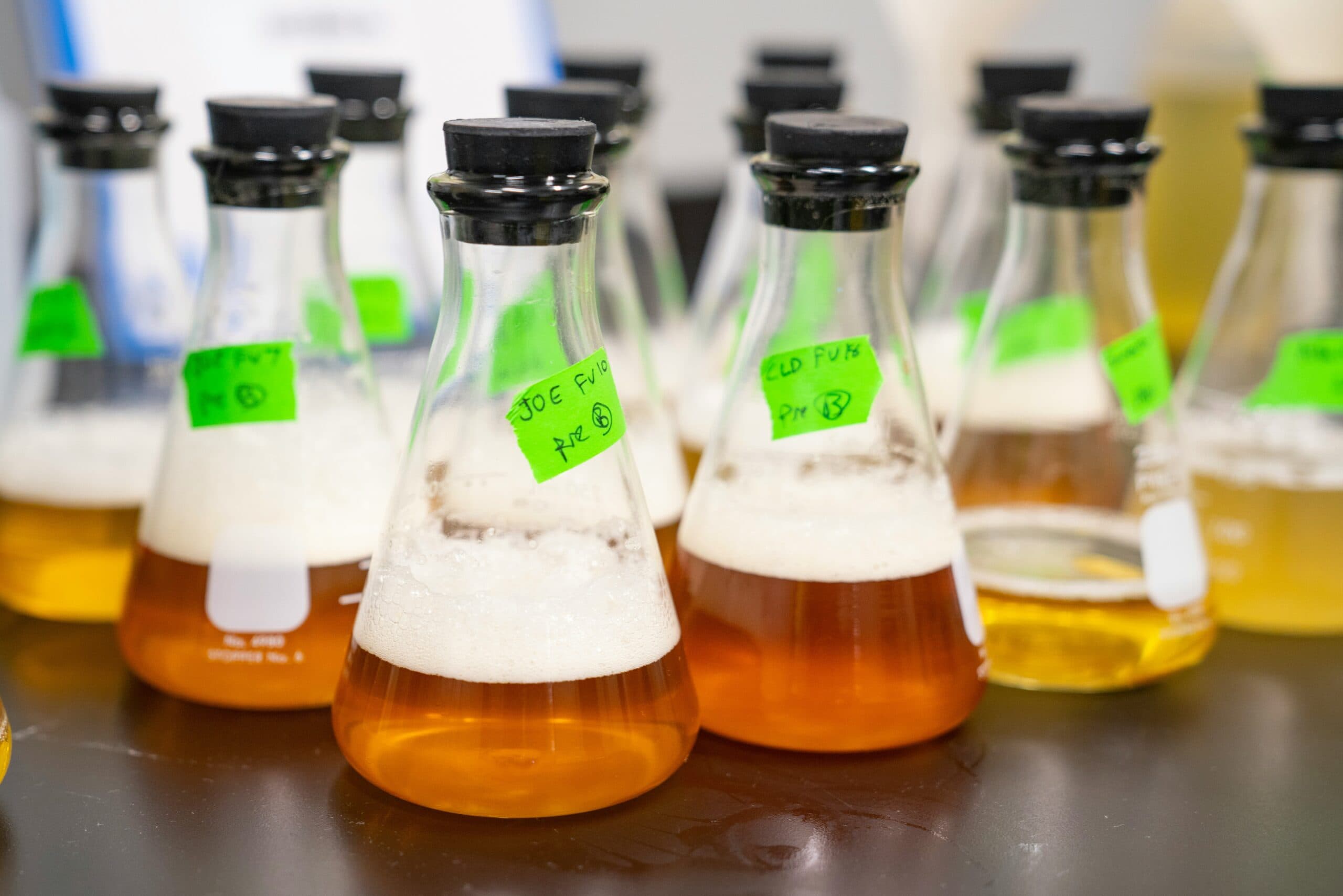
Where do you see yourself?
Chemical engineers work in a wide range of industries, from manufacturing to environmental services.
- Non-ferrous metal production and processing companies (excluding aluminum)
- Agri-food industry
- Chemical industry
- Pulp and paper industry
- Plastics industry
- Pharmaceutical and drug industry
- Refined petroleum product industry
- Steel industry
- Environmental consulting services
- Testing and analytical laboratory services
Where to study
Universities offering the program

ENGINEERING TO THE RESCUE
Reduce major-accident risk by 1,000%? A chemical engineering feat.
Chemical engineering students helped replace liquefied chlorine with a safer solution at the CEZinc plant in Valleyfield. Result: a 1,000% reduction in major-accident risk, along with lower operating costs.
20% to 40% less
chemicals in water
FROM RAW MATERIALS TO BIG INVENTIONS
A cellulose fibre that helps decontaminate water.
A Quebec research team developed a cellulose-fibre technology that treats water more efficiently. The result: 20% to 40% fewer chemicals used—while removing even more contaminants.
Engineering fields you might also like
Want to explore other options?
Your mission: find your field
An interactive game to help you discover the engineer in you. (In French only.)